You probably don’t spend much time walking around your house looking at the paint.
Most people don’t.
Then one day you’re pulling into the driveway and notice a spot above the garage that looks a little faded. Or you’re working in the yard and see paint peeling from a piece of trim. Maybe there’s a dark spot around a window that you don’t remember seeing before.
After an Atlanta summer, that’s actually a pretty good reason to take 10 minutes and walk around your house.
Georgia heat, strong sunshine, humidity, afternoon thunderstorms and moisture can be rough on a home’s exterior. And sometimes what looks like a small paint problem is actually your home’s way of telling you something else is going on underneath.
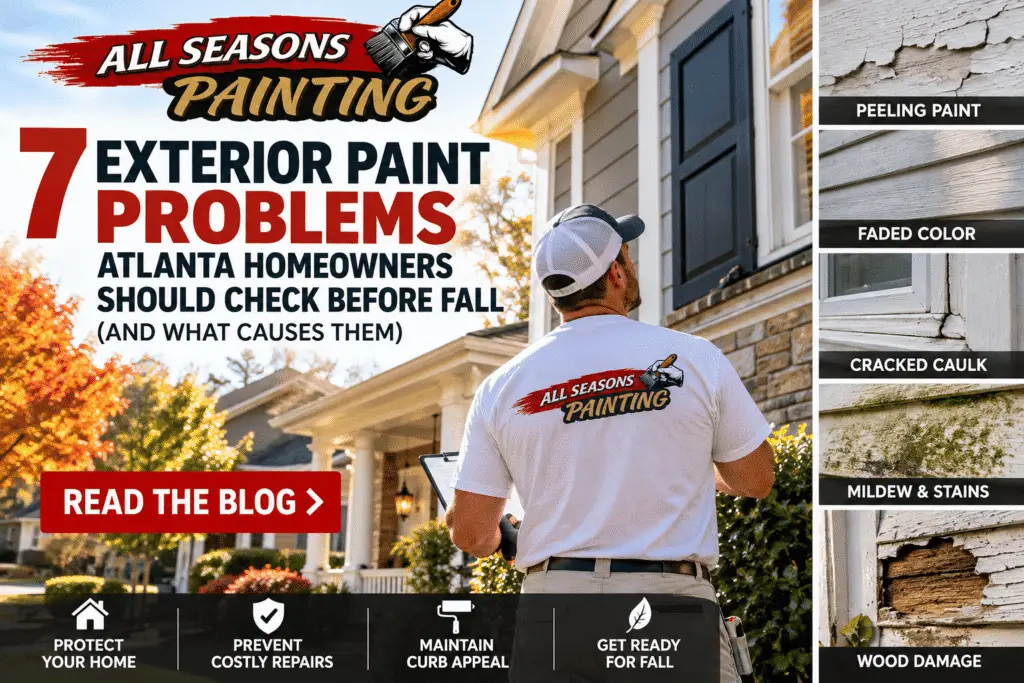
Before we get into cooler fall weather, here are seven things worth looking for.
1. Paint That’s Starting to Peel
A little peeling paint might not look like a big deal.
The problem is what’s underneath it.
Exterior paint isn’t there just to make your house look good. It’s also helping protect the wood and other exterior surfaces underneath from moisture and weather.
Once paint starts lifting away, that protection isn’t doing its job anymore.
Take a close look around window trim, door frames, fascia boards and other exposed wood. These tend to be some of the first places you’ll notice trouble.
If you catch peeling paint early, the repair may be fairly simple.
Ignore it long enough and you could eventually be replacing damaged wood instead of simply preparing and repainting it.
2. Faded Paint on the Sunny Side of Your House
Here’s an easy one to spot.
Stand back from your house and compare the different sides.
Does one side look noticeably lighter than the others?
Georgia sunshine can be relentless, especially on portions of a house that receive direct sunlight for hours every day. Over time, UV exposure can fade even good-quality exterior paint.
Fading doesn’t necessarily mean you have an emergency.
But if the color has changed significantly, it’s worth taking a closer look at the condition of the coating itself.
Sometimes a house doesn’t look “bad.”
It just doesn’t look as sharp as it did a few years ago.
You’d be surprised what a fresh exterior color can do.
3. Cracked or Missing Caulk
This is one homeowners often miss.
Walk up close to a few windows and doors and look at the seams.
See any gaps?
Exterior caulk doesn’t last forever. Years of changing temperatures, moisture and normal expansion and contraction can eventually cause it to crack, shrink or pull away.
Those little gaps matter because they can allow water to reach places you don’t want it.
When we prepare a house for painting, we’re not just thinking about what color goes on the wall. We’re looking at areas like these because a good exterior paint job starts with what’s underneath the paint.
A beautiful coat of paint over failing caulk is still a problem waiting to happen.
4. Bubbling or Blistering Paint
If your exterior paint looks like it has little bubbles underneath it, don’t simply paint over them.
There’s usually a reason they’re there.
Heat can contribute to blistering, but moisture trapped beneath a painted surface can also be responsible.
That’s why the first question shouldn’t be:
“What color paint do we need?”
It should be:
“Why did this happen?”
If there’s an underlying moisture or surface problem, another coat of paint isn’t going to solve it.
Find the cause first.
Then fix the finish.
5. Mildew, Green Growth or Dark Stains
Atlanta’s humidity is good at growing things.
Unfortunately, that sometimes includes things you don’t want growing on the side of your house.
Shaded areas and places that stay damp can develop mildew, algae and dark staining. North-facing walls and areas surrounded by trees are especially worth checking.
Sometimes the solution is simply proper cleaning.
Other times, staining can point toward a drainage or moisture issue that deserves a closer look.
Either way, you don’t want to paint directly over a dirty or contaminated surface and hope for the best.
Proper preparation matters.
A lot.
6. Bare or Exposed Wood
If you only check one thing on this list, check your exposed wood.
Pay particular attention to:
- Window trim
- Door frames
- Fascia
- Soffits
- Porch columns
- Railings
- Decorative trim
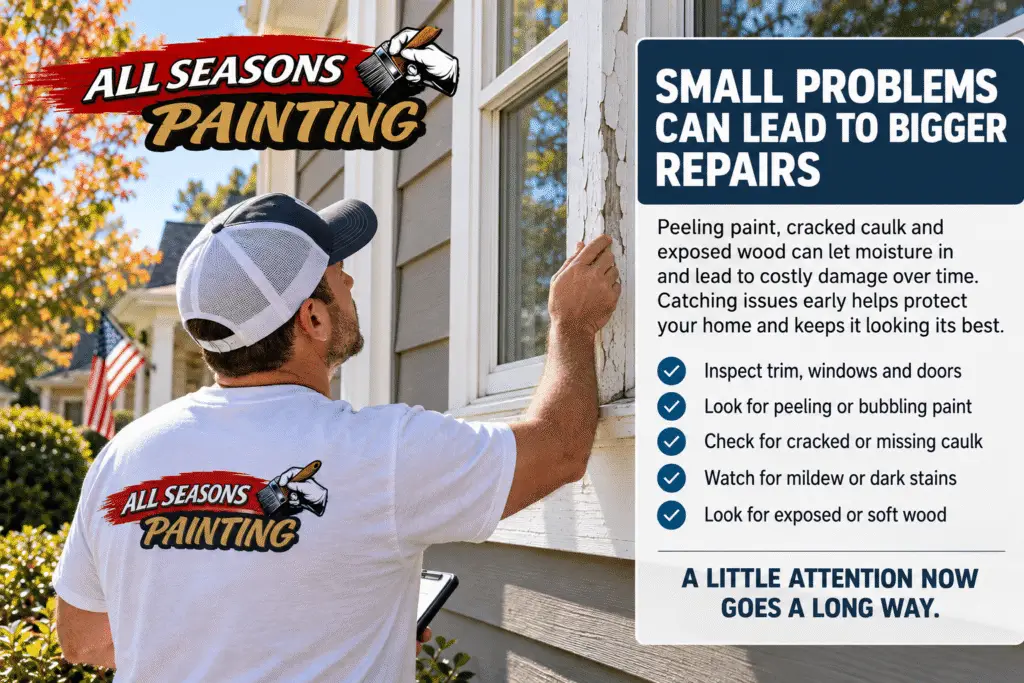
If paint has worn away enough that you can see bare wood, it’s time to pay attention.
Wood and water aren’t exactly best friends.
Once bare wood repeatedly absorbs moisture, you can eventually end up with deterioration or rot.
Catching it early is almost always better — and less expensive — than waiting until a board needs to be repaired or replaced.
7. Wood That Looks or Feels Soft
This one goes beyond paint.
If you’re looking at an area where the paint has been failing for a while, pay attention to the wood itself.
Does it look swollen?
Cracked?
Does an area seem unusually soft or deteriorated?
There may be more going on than a tired paint job.
At All Seasons Painting, we run into this fairly often. A homeowner calls because they think they need something painted, and once we get a closer look, we discover wood that needs attention first.
That’s actually a good thing to discover before painting.
Because the last thing we want to do is make a problem look pretty for a little while.
We’d rather address what needs attention and then paint it correctly.
Take 10 Minutes and Walk Around Your House This Weekend
You don’t need to climb onto your roof.
And please don’t drag out a ladder just because you read this article.
Just walk around your house.
Start at the front door and make one complete lap.
Look at the trim.
Look underneath the windows.
Look along the roofline from the ground.
Check the side of your house that gets the most afternoon sun.
Take a closer look at shaded areas that seem to stay damp longer after it rains.
You might find absolutely nothing.
Great.
Or you might find one little spot today that could save you from a much bigger repair later.
That’s the point.
Frequently Asked Questions About Exterior Paint Problems in Atlanta
Why is the exterior paint on my house peeling?
Exterior paint can peel for several reasons, including age, moisture getting behind the coating, improper surface preparation, strong sun exposure or an older coating losing its bond with the surface.
In the Atlanta area, our combination of heat, humidity, rain and strong sunshine can all contribute.
The important thing is determining why the paint is peeling before simply putting another coat over it.
How do I know when my house needs to be repainted?
Peeling or cracking paint, significant fading, exposed wood, failing caulk, bubbling paint and areas where the coating is no longer protecting the surface are all signs that it may be time to repaint.
Sometimes a home still looks pretty good from the street. Walking around and inspecting it up close can reveal problems much earlier.
Can you paint over peeling exterior paint?
That’s generally not the right way to handle it.
Loose or failing paint needs to be properly addressed and the surface prepared before new paint is applied.
More importantly, if moisture, failing caulk or damaged wood caused the peeling, that problem should be addressed first.
Painting over the symptom doesn’t fix the cause.
Does Atlanta’s heat and humidity affect exterior house paint?
Yes, it can.
Heat, strong UV exposure and high humidity can all affect exterior coatings over time. Persistent moisture can also contribute to mildew, staining, blistering and other problems.
That’s one reason experienced painters look at both weather conditions and the condition of the surface when evaluating an exterior painting project.
What causes exterior paint to bubble or blister?
Blistering can occur when excessive heat or moisture interferes with the bond between the paint and the surface underneath.
If you’re seeing bubbling paint, it’s worth determining what’s causing it before repainting the area.
Otherwise, the same problem may eventually return.
Can peeling paint lead to wood rot?
Peeling paint itself doesn’t cause wood rot.
However, failing paint can leave exterior wood less protected from moisture. If that wood repeatedly gets wet and doesn’t dry properly, deterioration can eventually develop.
Catching exposed or damaged wood early can prevent a relatively small maintenance issue from becoming a much larger repair.
How often should you paint the exterior of a house in Georgia?
There isn’t one schedule that fits every Atlanta-area home.
The type of siding, quality of the previous paint job, surface preparation, sun exposure, moisture, landscaping and paint products used can all affect how long an exterior coating lasts.
Instead of relying only on the number of years since your last paint job, pay attention to the actual condition of your home’s exterior.
If the coating is failing, your house is telling you it’s time to take a closer look.
Is fall a good time to paint a house in Atlanta?
Fall can provide excellent opportunities for exterior painting in the Atlanta area.
As the extreme summer heat begins to ease, there can be plenty of days with conditions suitable for exterior painting.
A professional painter should consider the actual weather, surface temperature, moisture and the manufacturer’s requirements for the specific coating being used rather than relying solely on the season.
Not Sure What You’re Looking At? We’ll Take a Look.
Sometimes it’s obvious that a house needs painting.
Sometimes it isn’t.
If you’re seeing peeling paint, cracked caulk, faded siding, exposed wood or an area that simply doesn’t look right, you don’t have to diagnose it yourself.
That’s what we’re here for.
At All Seasons Painting, we’ve been working on homes in the Atlanta area for decades. We’ve seen what Georgia heat, humidity, sunshine and storms can do to an exterior, and we understand the difference between something that’s mostly cosmetic and something that deserves a closer look.
We’ll tell you what we see, what we recommend and what we would do if it were our own home.
Because a good paint job isn’t just about changing the color of your house.
It’s about taking care of what’s underneath it, too.
Think Your Home May Need Some Attention?
Contact All Seasons Painting today to schedule an estimate for your exterior painting project in the Atlanta area.