
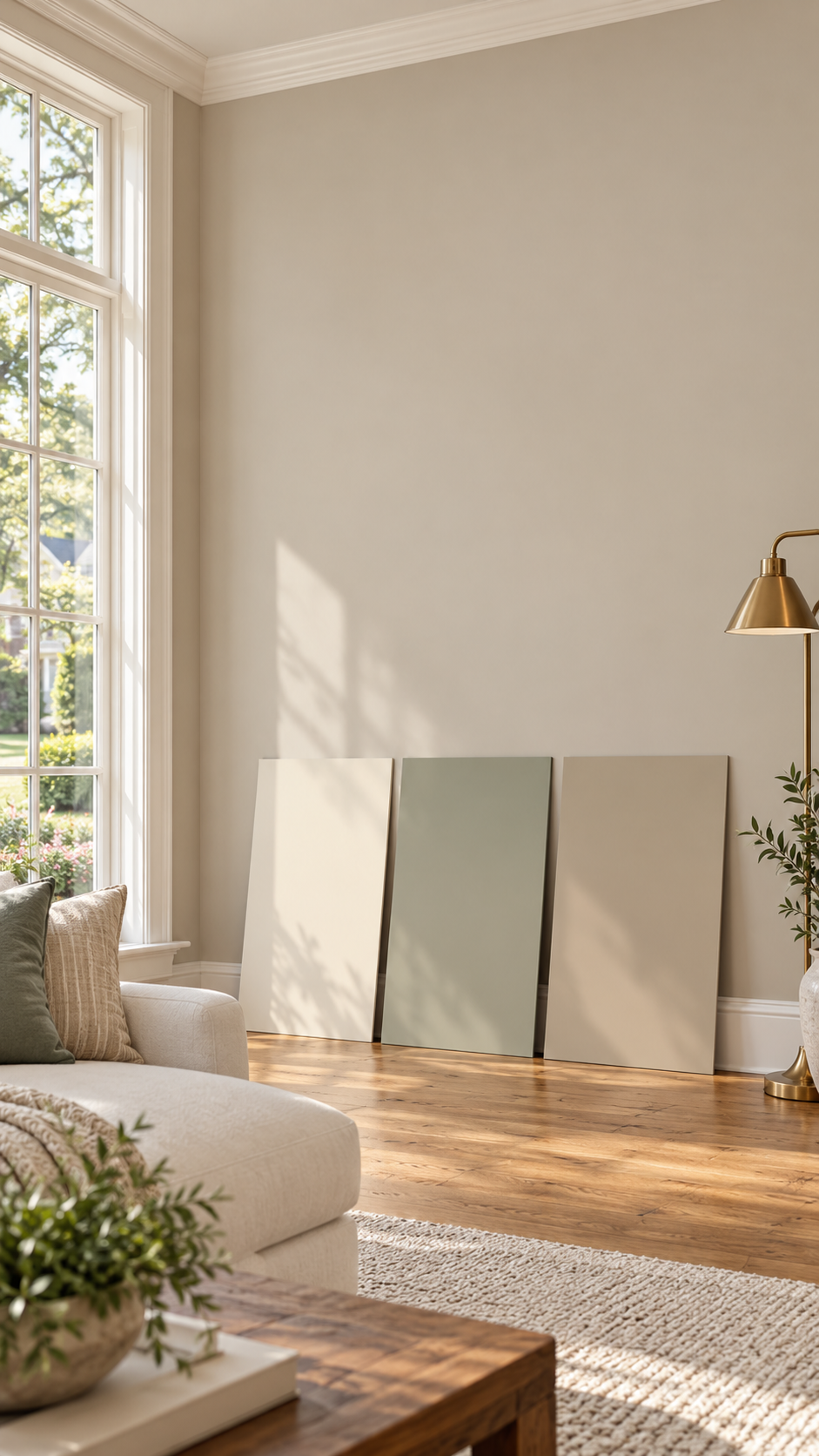
You loved the sample in the store. At home, that soft neutral suddenly looks a little yellow, green, or gray. Before you cross it off the list, take a closer look at the room around it.
Choosing interior paint is easier when you test the color where you will actually live with it. For homeowners in Peachtree City and the surrounding South Atlanta communities, a little time with samples can make the final decision feel much less like a guess.
1. Give your samples a real place in the room
A small color chip is useful for narrowing your options. Once you have a shortlist, look at larger physical samples. Set them near the wall you intend to paint, then move them to other parts of the room.
A removable sample or painted board lets you compare the color beside a window, in a shaded corner, and next to the trim. If you apply sample paint directly to a wall, talk with your painter about preparing those test areas before the finished coats go on.
Start with two or three candidates. Label them clearly with the manufacturer and color name so you can keep track without relying on memory. You are choosing a color for your home, so give yourself permission to set aside the one that looked best in someone else’s photo.
2. Check daylight and the lamps you actually use
Daylight and artificial lighting can make the same painted surface appear different. Window direction, shadows, and the light from your fixtures all matter. Sheen also changes the way light reflects from the surface. Sherwin-Williams explains how lighting and finish affect paint color.
Use a simple viewing routine: check your shortlist in the morning, later in the day, and after dark with your usual lights on. Stand where you normally spend time, rather than judging everything from a few inches away.
For an evening family room, the lamp-lit view deserves attention. For a breakfast area, make sure you like what you see during breakfast. If you already plan to change the light fixtures or bulbs, make that decision before approving the paint color.
3. Compare the color with what stays
Look at each candidate beside your flooring, cabinets, counters, furniture, and existing trim. Consider the room as a whole. A color that seems perfect on its own may feel less comfortable next to a finish you are keeping.
Try this practical check: write down the three largest features that will remain after painting. Then view each sample beside those features. This gives your decision a clear reference point instead of starting over every time you discover another attractive color online.
If rooms connect through an open doorway, look at the samples from both sides. You do not have to use one color everywhere, but it helps to consider what you will see together.
4. Choose the finish alongside the color
Your painter needs more than a color name. Talk through the paint product and finish for the walls, trim, doors, and ceilings. A sample product may have a different sheen from the coating specified for the finished work, so ask how you can confirm the final combination.
Our guide to eggshell, satin, and semi-gloss explains the questions worth asking. Keep the selected manufacturer, color code, product, and finish with your project paperwork.
A simple weekend color-check plan
- Narrow the options. Choose two or three colors and obtain physical samples.
- Try different positions. Compare them near windows, trim, and the materials you are keeping.
- Revisit them. Look in daylight and with your everyday evening lighting.
- Confirm the specification. Discuss the final product, finish, sample preparation, and approval process with your painter.
You do not need to rush the choice simply because a painting date is approaching. Ask when final color approval is needed so the decision fits the project schedule.
Quick answers to common paint-color questions
Why does the same paint look different in two rooms?
The rooms may have different lighting, surrounding finishes, or viewing angles. Test the color in each room where you plan to use it.
Can I choose paint from a phone photo?
Use photos for inspiration and a shortlist. Confirm the choice with a physical sample in your room before committing.
Should I choose the wall color before the flooring?
If you are replacing the flooring, bring its selected sample into the color discussion. If the floor is staying, use it as one of your starting references.
Does white paint need testing too?
Yes. Compare your shortlisted whites beside the trim, cabinets, and other surfaces you plan to keep, in the lighting you use.
What should I tell the painter before work begins?
Confirm which surfaces are included, the approved colors, products and finishes, needed preparation, and the project schedule. Our 30-question painting FAQ guide can help you prepare.
Ready to plan your interior refresh?
All Seasons Painting provides interior painting services in Peachtree City, Fayetteville, Newnan, Tyrone, Sharpsburg, Senoia, and surrounding South Atlanta communities.
Bring your shortlist and project questions to the conversation. Request a free estimate or call (678) 820-6608.